
Can Veterans Claim GERD Secondary to an Anxiety Disorder?

Author: Jessica R. Allen, M.D., Physician and Former C&P Examiner
To contact Dr. Allen, please call (919) 849-8617 or book a free phone consultation.
Reviewed: August 2026
Summary: Yes. A veteran may be able to obtain VA service connection for gastroesophageal reflux disease, or GERD, when a service-connected anxiety disorder caused the condition or made it chronically worse. The strongest claims do more than show that anxiety and GERD exist at the same time. They explain how the veteran’s particular anxiety symptoms, panic attacks, treatment history, medications, sleep disruption, and behavioral changes contributed to the onset or worsening of reflux.
Anxiety does not affect only the mind. It can also influence breathing, swallowing, muscle tension, sleep, eating patterns, and the way the nervous system processes uncomfortable sensations. For some veterans, that connection becomes especially noticeable during periods of intense anxiety or panic. GERD nexus letters can make the connection.
What Is GERD?
GERD occurs when stomach contents repeatedly flow backward into the esophagus. Common symptoms include:
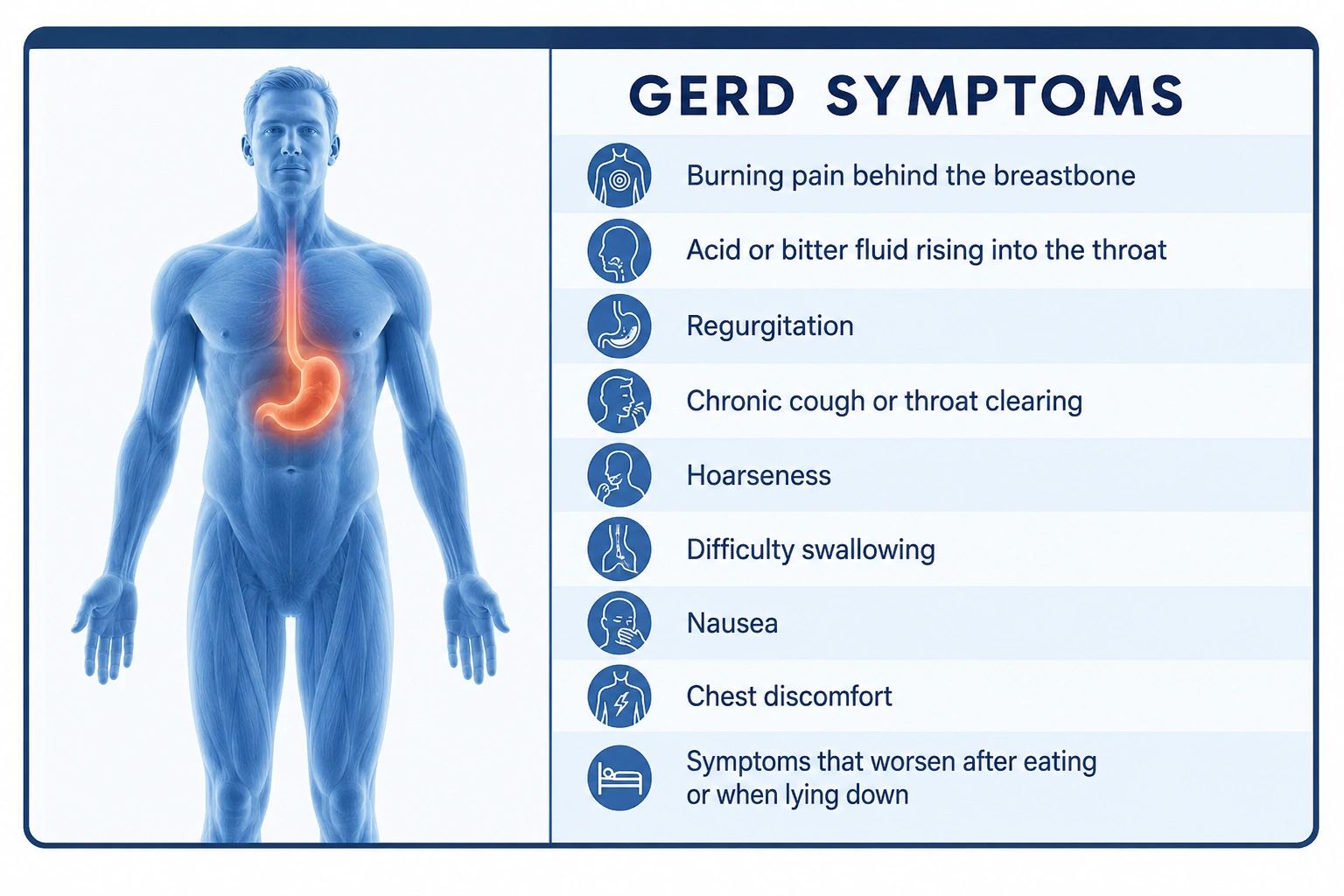
Some veterans describe the sensation as pressure, burning, choking, or a feeling that something is stuck in the chest or throat.
Because GERD can produce chest pain, symptoms should not automatically be assumed to be anxiety or reflux. New, severe, or unexplained chest pain—particularly when accompanied by shortness of breath, sweating, faintness, or pain radiating to the arm, jaw, or back—requires prompt medical evaluation.
Can Anxiety Cause or Aggravate GERD?
The relationship between anxiety and GERD is often more complicated than a simple statement that “stress causes acid reflux.”
Research has found meaningful associations between anxiety, psychological distress, and GERD symptoms. Anxiety may increase symptom awareness, amplify the perception of esophageal discomfort, contribute to excessive air swallowing, and reduce quality of life among people experiencing reflux. Studies have also found associations between stressful psychosocial conditions and GERD symptoms.
This does not mean every person with anxiety will develop GERD. It also does not mean that the mere presence of anxiety automatically proves a VA nexus. The medical opinion must explain how the veteran’s individual course is medically consistent with either:
- Anxiety causing GERD, or
- Anxiety aggravating GERD beyond its expected course
For many veterans, aggravation may be the more medically supportable theory.
How Panic Attacks Can Provoke GERD Exacerbations
A panic attack can create a cascade of physical changes that overlaps with—and may intensify—reflux symptoms.
During a panic episode, a veteran may breathe rapidly, swallow repeatedly, tense the abdominal and chest muscles, feel nauseated, or develop pressure in the chest and throat. Anxiety has also been associated with excessive air swallowing, which can contribute to belching, abdominal pressure, and greater awareness of upper gastrointestinal symptoms.
A veteran may notice a pattern such as:
“When my panic begins, I start breathing rapidly and swallowing air. I then develop belching, burning in my chest, acid in my throat, and nausea. The reflux can continue even after the panic has started to settle.”
The important issue is not simply whether panic and reflux occur together. The claim should document whether panic episodes reliably precede, intensify, or prolong GERD symptoms.
Anxiety May Increase the Severity of Reflux Symptoms
Anxiety can affect how strongly a person experiences bodily sensations. This does not mean the symptoms are imaginary.
The esophagus is highly sensitive, and two people with similar amounts of reflux may experience very different levels of pain, burning, pressure, or choking. Psychological distress may increase vigilance toward internal sensations and reduce the threshold at which esophageal activity is experienced as painful or alarming.
This can create a difficult cycle:
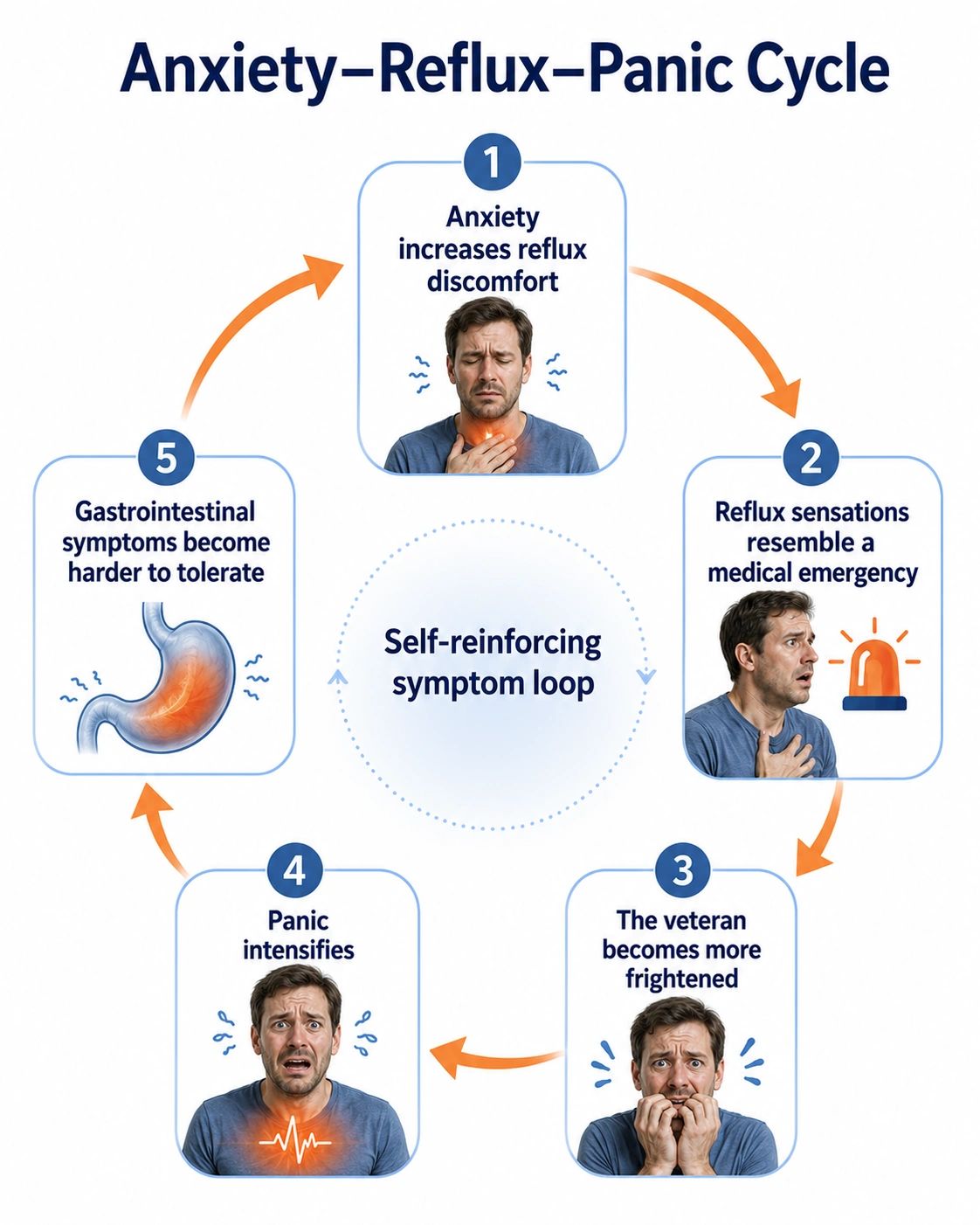
Anxiety increases reflux discomfort → reflux sensations resemble a medical emergency → the veteran becomes more frightened → panic intensifies → gastrointestinal symptoms become harder to tolerate.
For a veteran with panic disorder, chest burning or throat tightness may trigger fears of a heart attack, suffocation, or loss of control. That fear can heighten autonomic arousal and make the entire episode more severe.
Acute stress research does not establish that stress always increases the actual number of reflux events. However, it supports the broader point that stress can influence esophageal symptoms and symptom experience.
Medication May Also Be Relevant
A secondary GERD claim should include a careful review of the medications used to treat the service-connected anxiety disorder.
In some cases, anxiety-related weight gain or medication-associated weight gain may also be medically relevant. Obesity can increase intra-abdominal pressure and is an established risk factor for reflux. This could create a multi-step theory in which the service-connected psychiatric condition contributed to weight gain, which then contributed to GERD. That theory requires individualized medical reasoning and should not be assumed merely because the veteran has a higher body mass index.
Read our blog about claiming GERD secondary to chronic NSAID use.
What VA Requires for Secondary Service Connection
Under 38 C.F.R. § 3.310, a disability may be service connected when it is proximately due to, the result of, or aggravated by an already service-connected condition.
A GERD secondary to anxiety claim generally needs evidence of:
- A current GERD diagnosis
- A service-connected anxiety disorder
- A medical nexus explaining causation or aggravation
The anxiety disorder might be diagnosed as:
- Generalized Anxiety Disorder
- Panic Disorder
- Unspecified Anxiety Disorder
- Adjustment Disorder with Anxiety
- PTSD with prominent anxiety or panic symptoms
- Another service-connected psychiatric diagnosis that includes clinically significant anxiety
The diagnostic label matters less than accurately describing the veteran’s actual symptoms and their relationship to the gastrointestinal condition.
The Board of Veterans’ Appeals has granted GERD secondary to service-connected anxiety in individual cases when the medical and factual evidence supported the relationship. However, Board decisions are specific to the veteran involved and do not guarantee that another claim will be approved.
Causation and Aggravation Are Different Arguments
A GERD nexus letter opinion should address both theories when medically appropriate.
Anxiety caused the GERD
This theory argues that the veteran probably would not have developed GERD, or would not have developed it in the same manner, without the effects of the service-connected anxiety disorder.
The evidence might show that:
- GERD began after the anxiety disorder became severe
- Reflux initially appeared during frequent panic attacks
- Anxiety-related behaviors or treatment materially contributed to GERD
- No more persuasive alternative cause explains the onset
Anxiety aggravated the GERD
This theory acknowledges that GERD may have another underlying cause but argues that anxiety made it worse.
Examples might include:
- Panic attacks repeatedly provoke reflux exacerbations
- GERD became more frequent as anxiety worsened
- The veteran required stronger or additional medication after psychiatric deterioration
- Nighttime anxiety increased regurgitation or sleep interruption
- Symptoms remained more severe during prolonged periods of anxiety
- GERD would likely be less frequent or less disabling without the anxiety disorder
Aggravation does not require the anxiety disorder to be the original cause of GERD. The current regulation recognizes secondary service connection when a nonservice-connected disability is aggravated by a service-connected condition, although evidence establishing the baseline and increased severity may become important.
Evidence That May Strengthen the Claim
Helpful evidence may include:
- VA rating decision confirming the anxiety disorder is service connected
- Primary care or gastroenterology records
- Formal GERD diagnosis
- Endoscopy, barium swallow, imaging, or other testing when performed
- Medication history, including proton-pump inhibitors or H2 blockers
- Mental health treatment notes documenting panic attacks
- Emergency-room visits for chest pain later attributed to reflux or panic
- Records showing GERD flares during anxiety exacerbations
- Sleep records documenting nighttime reflux
- A symptom journal
- Statements from a spouse or family member
- A GERD medical nexus letter
Why a Generic Nexus Letter May Fail
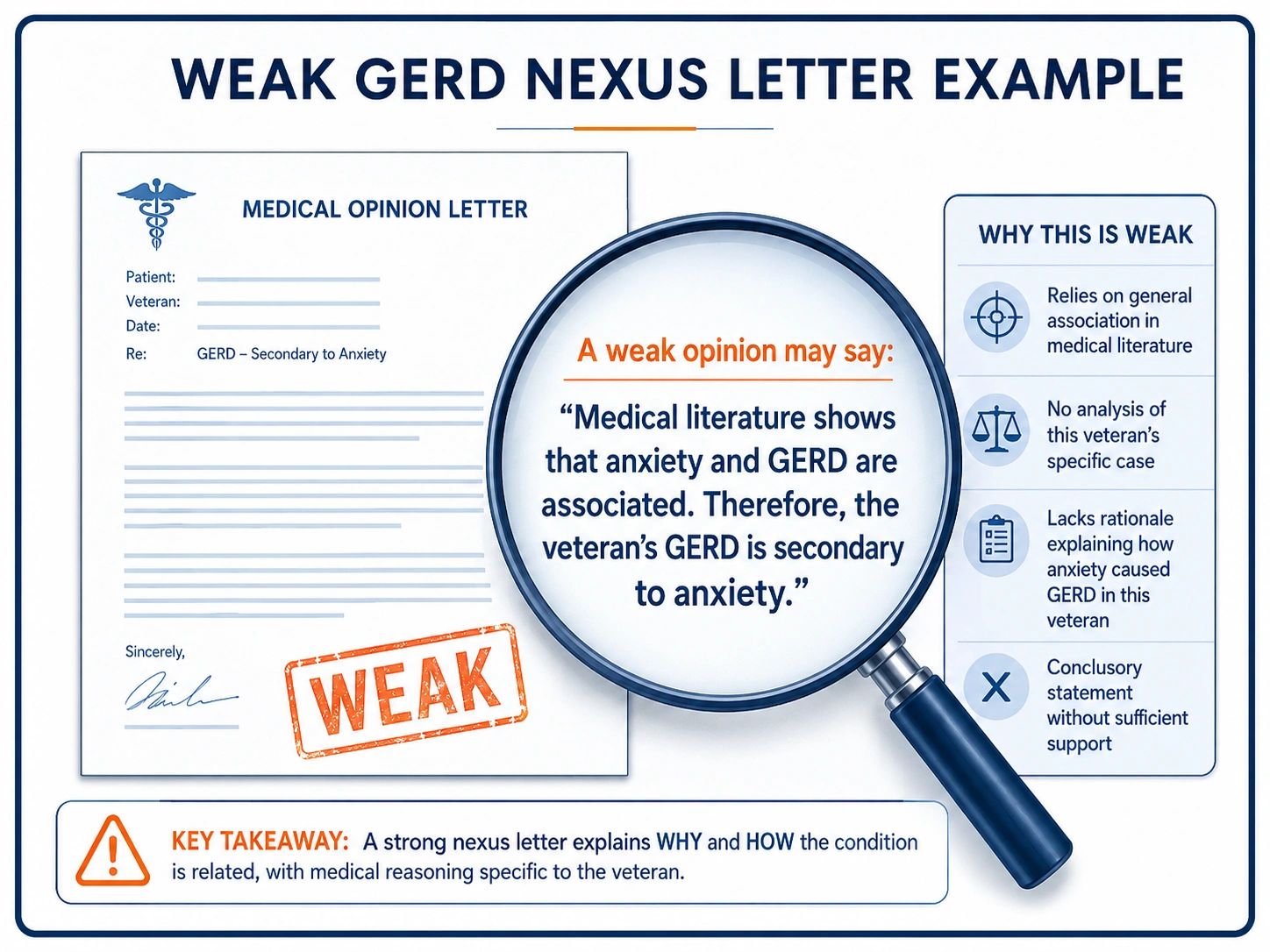
A weak opinion may say:
“Medical literature shows that anxiety and GERD are associated. Therefore, the veteran’s GERD is secondary to anxiety.”
That is not enough.
Association does not automatically establish causation in a particular veteran.
How Does VA Rate GERD?
VA now lists GERD under Diagnostic Code 7206. The digestive-system rating schedule was revised effective May 19, 2024.
Under the current criteria, compensable GERD evaluations focus heavily on documented esophageal strictures, difficulty swallowing, medication requirements, dilation procedures, stent placement, aspiration, undernutrition, substantial weight loss, surgery, or feeding-tube treatment. The available evaluations are 0, 10, 30, 50, and 80 percent, depending on the documented severity. Certain findings must be confirmed through studies such as endoscopy, CT imaging, or barium swallow.
This is important because winning service connection and receiving a compensable rating are separate issues. A veteran may establish that anxiety caused or aggravated GERD but still receive a 0 percent evaluation if the evidence does not meet the current compensable criteria.
Claims involving older rating periods may require analysis under the criteria applicable to those periods.
Final Takeaway
GERD secondary to an anxiety disorder is a medically plausible VA claim, particularly when the evidence shows a consistent relationship between panic attacks, chronic anxiety, behavioral changes, psychiatric treatment, and worsening reflux.
The strongest claim does not merely say, “My GERD gets worse when I am stressed.” It builds a clear timeline and explains what actually happens:
- Panic begins
- Breathing and swallowing change
- Chest and abdominal tension increase
- Reflux symptoms flare
- Medication or behavioral measures become necessary
- Sleep, work, eating, or daily functioning are disrupted
A well-supported nexus letter can then connect that pattern to the veteran’s service-connected anxiety disorder using the medical records, lay evidence, relevant research, and individualized clinical reasoning.
Why Work with Dr. Allen
Dr. Jessica Allen is well suited to write a nexus letter for GERD secondary to an anxiety disorder because she is a physician and psychiatrist with experience evaluating veterans and explaining how psychiatric symptoms can affect physical health. Her expertise allows her to assess the veteran’s anxiety symptoms, panic-related physiological responses, sleep disruption, medication history, and patterns of GERD exacerbation. She can then provide a personalized medical rationale that applies the research to the veteran’s specific history rather than relying on a general association alone.
To contact Dr. Allen, please call (919) 849-8617 or book a free phone consultation.
Related Webpages
This article provides general educational information and is not legal advice or a guarantee of VA benefits.