
Depression Secondary to Prostate Cancer - Nexus Letter

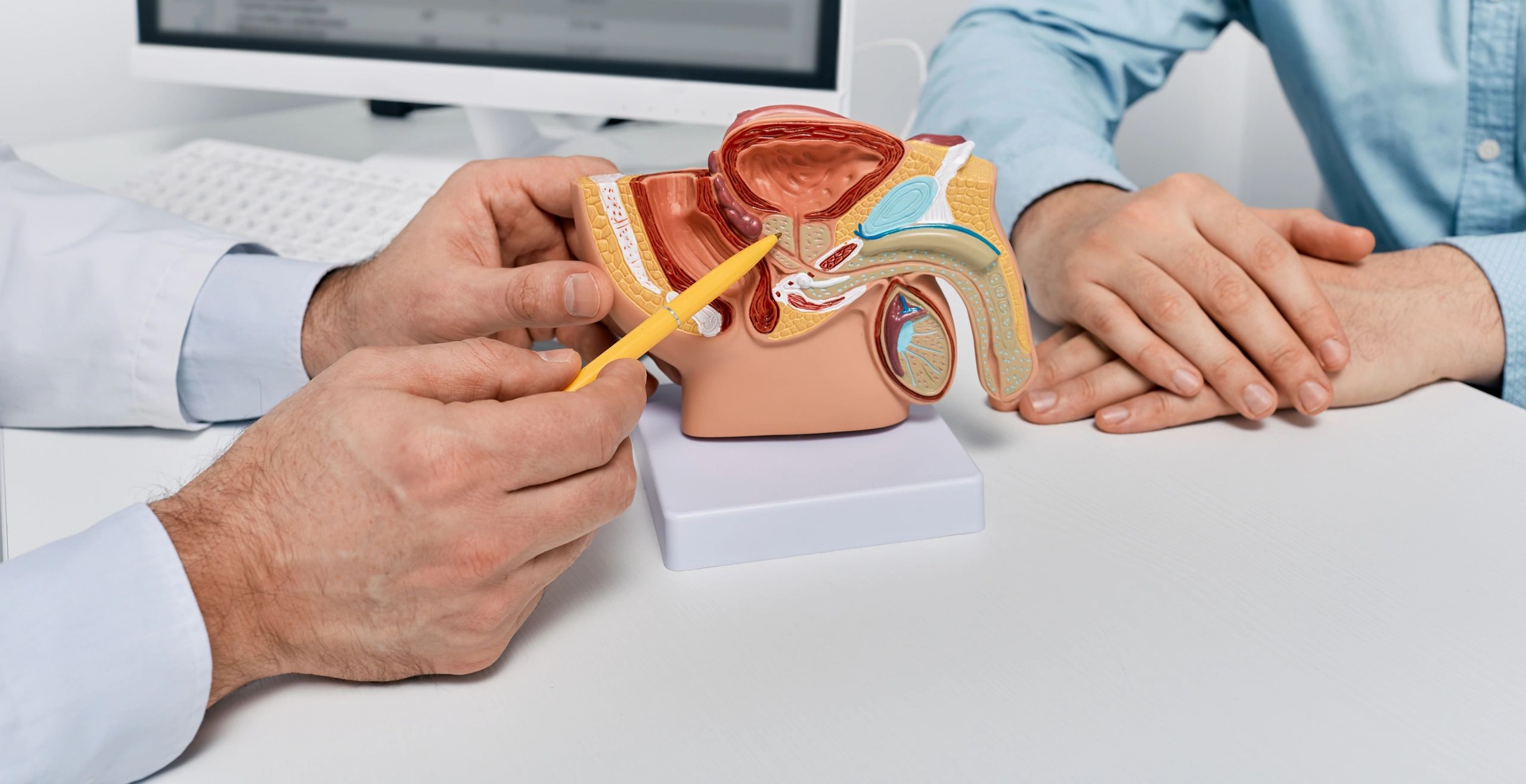
Prostate Cancer and Depression: What Veterans Need to Know About VA Ratings and Secondary Conditions
Author: Jessica R. Allen, M.D., physician and former C&P examiner
If you would like to discuss your case with Dr. Allen, book a free phone consultation at this link.
Updated: June 27, 2026
Key Takeaways
- Depression is one of the most common psychological effects of prostate cancer — roughly 1 in 6 men with the disease experience clinical depression.
- If your prostate cancer is service-connected, depression that it caused or worsened can be claimed as a secondary service-connected condition under 38 C.F.R. § 3.310.
- Depression is rated separately from prostate cancer, under the General Rating Formula for Mental Disorders (38 C.F.R. § 4.130, Diagnostic Code 9434), at 0%, 10%, 30%, 50%, 70%, or 100%.
- A strong claim needs three things: a current DSM-5 diagnosis, a service-connected primary condition (the prostate cancer), and a medical nexus opinion linking the two.
- A nexus letter from a psychiatrist can supply the medical rationale the VA needs — including whether the depression was caused or aggravated by the cancer, its treatment, or its after-effects.
If you’re a veteran who has been diagnosed with prostate cancer, you may already know that the VA provides disability compensation for this condition. But what many veterans don’t realize is that you may also be eligible for additional benefits if your prostate cancer leads to other health problems, like depression.
As a psychiatrist who writes nexus letters for veterans, I want to explain how prostate cancer can affect your mental health, how the VA rates prostate cancer, and how a nexus letter can help strengthen your claim if you are suffering from depression as a secondary condition.
Can you get a VA disability rating for depression caused by prostate cancer?
Yes. If your prostate cancer is service-connected, you can claim depression as a secondary condition under 38 C.F.R. § 3.310. Secondary service connection means a new condition is compensable when a service-connected disability either caused it or aggravated (permanently worsened) it. You do not need to show the depression began in service — only that it stems from the prostate cancer.
This matters because the prostate cancer itself is frequently service-connected (see the presumptive section below), which opens the door to the secondary depression claim without having to trace the depression all the way back to active duty.
How common is depression in men with prostate cancer?
Depression is common and frequently underdiagnosed in this population. A systematic review and meta-analysis of nearly 4,500 patients found depression prevalence of roughly 17–18% across the pre-treatment, on-treatment, and post-treatment phases (BMJ Open, 2014). A focused clinical review reached a similar figure — about 1 in 6 men with prostate cancer experience clinical depression, and suicidal ideation is not uncommon (2019).
The takeaway for veterans: depression after a prostate cancer diagnosis is not unusual or "all in your head." It is a well-documented, measurable consequence recognized throughout the medical literature.
How does prostate cancer cause or worsen depression?
Prostate cancer affects mood through several overlapping pathways, which is why a careful medical opinion looks at more than the diagnosis alone:
- The diagnosis itself. A cancer diagnosis is a major psychological stressor. Fear of recurrence, mortality concerns, and loss of a sense of control are recognized drivers of depression and anxiety.
- Androgen deprivation therapy (ADT). Hormone therapy that lowers testosterone is a mainstay of prostate cancer treatment and is independently associated with higher rates of depression (Frontiers/PMC review). Testosterone influences mood, so suppressing it can have direct depressive effects.
- Functional losses. Erectile dysfunction, urinary incontinence, and fatigue — common after surgery, radiation, or hormone therapy — strike at identity, intimacy, and independence, and are strongly tied to depressed mood.
- Compounding effects. Depression also worsens cancer outcomes: it is associated with poorer treatment adherence and survival (Journal of Clinical Oncology, 2014), making early recognition important.
A psychiatrist's nexus opinion can identify which of these pathways applies to your case and explain it in the medical terms the VA looks for.
If you would like to discuss your case with Dr. Allen, book a free phone consultation at this link.
How the VA Rates Prostate Cancer
If you are service-connected for prostate cancer, the VA will typically give you a 100% rating while you are actively being treated. This includes surgery, radiation, or chemotherapy. Once your treatment ends, the VA will re-evaluate your condition based on the residual effects, such as:
- Urinary incontinence
- Frequent urination (nocturia)
- Erectile dysfunction
These residuals are rated based on how severe they are. For example, needing to use absorbent pads several times a day for incontinence can increase your rating. Erectile dysfunction, while often rated at 0%, may still qualify you for Special Monthly Compensation (SMC).
Depression as a Secondary Condition to Prostate Cancer
Many veterans face more than just the physical symptoms of prostate cancer. It can also take a serious toll on your mental health. Depression is common after a life-changing diagnosis, especially when you’re dealing with long-term side effects like incontinence or sexual dysfunction.
You might feel:
- Embarrassed about leakage accidents
- Frustrated about not being able to be intimate with your partner
- Exhausted from poor sleep caused by waking up to urinate at night
- Anxious about the cancer coming back
How does the VA rate depression secondary to prostate cancer?
Depression is rated under the General Rating Formula for Mental Disorders (38 C.F.R. § 4.130, Diagnostic Code 9434 for major depressive disorder). The rating is based on the degree of occupational and social impairment your symptoms cause — not on the diagnosis alone. Ratings are assigned at six levels:
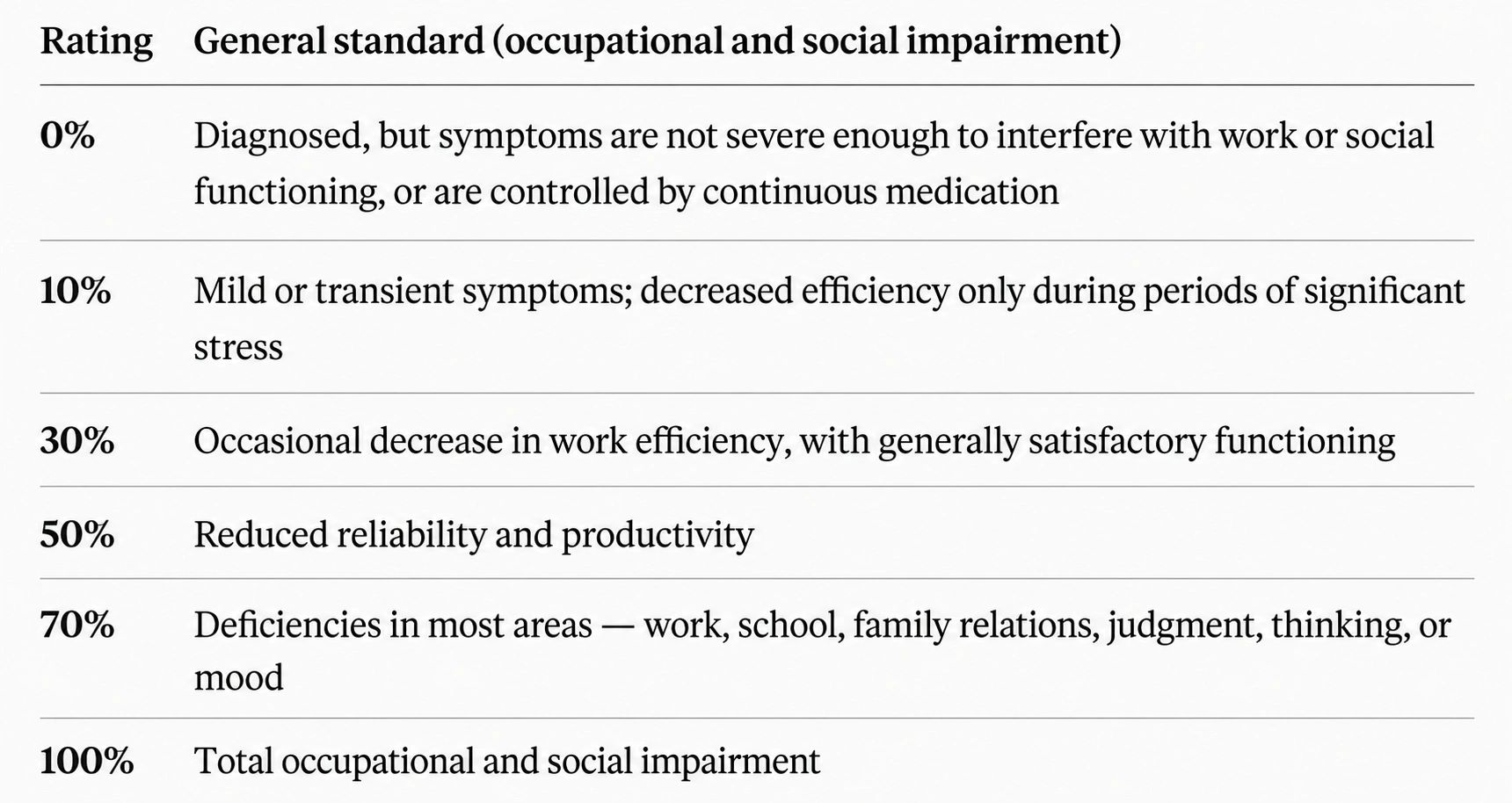
Important — depression is rated separately from the cancer. Because depression and prostate cancer affect different functional systems, the depression rating is added (via VA's combined-ratings math) to your prostate cancer rating rather than being absorbed into it. This is not "pyramiding," which only bars rating the same symptoms twice.
How a Nexus Letter Helps Your Claim
A nexus letter is a medical document written by a licensed healthcare provider—like me—that explains the connection between your service-connected condition and your secondary condition. In this case, the letter would explain how your prostate cancer (and its side effects) caused or worsened your depression.
What does a nexus letter for depression secondary to prostate cancer need to include?
A persuasive nexus letter ties together three required elements and explains the medicine behind them:
- A current diagnosis. A clear DSM-5 diagnosis (e.g., major depressive disorder), not just "feeling down."
- The service-connected primary condition. Identification of the prostate cancer as the already service-connected disability.
- The medical nexus. A reasoned opinion that the depression is "at least as likely as not" (a 50% or greater probability) caused or aggravated by the prostate cancer, its treatment, or its residual effects — citing the veteran's own records and the supporting medical literature.
The strongest letters also address aggravation specifically: if you had some baseline depression that the cancer made permanently worse, that is independently compensable. An opinion that only discusses causation can leave the aggravation theory — and benefits — on the table.
What evidence strengthens a depression-and-prostate-cancer claim?
- Documentation that your prostate cancer is service-connected (rating decision or presumptive basis).
- Mental health treatment records — therapy notes, prescriptions, hospitalizations, or screening scores (PHQ-9).
- A DSM-5 diagnosis from a qualified psychiatrist or psychologist.
- A nexus letter / Independent Medical Examination explaining causation or aggravation.
- Lay statements from you, family, or fellow service members describing how your mood and functioning changed after the diagnosis or treatment.
Final Thoughts
If you’re a veteran dealing with the effects of prostate cancer and also struggling with depression, you are not alone—and you are not without options. You deserve full recognition and support for every part of your condition, including your mental health.
A well-written nexus letter can help make your claim stronger and ensure you get the benefits you’ve earned. If you're ready to take the next step, consider speaking with a provider who understands both the medical and VA disability systems.
Your service matters. Your health matters. And your story deserves to be heard.
Schedule a free phone consultation today: Scheduling Link
Learn More About Cancer and Depression
Frequently Asked Questions
Can depression be service-connected if it started years after my prostate cancer? Yes. Secondary conditions often develop over time. What matters is the medical link between the cancer (or its treatment) and the depression — not how quickly the depression appeared.
Will a depression rating reduce my prostate cancer rating? No. Depression is rated separately under the mental disorders formula and combined with your other ratings. The pyramiding rule only prevents rating the same symptoms under two codes.
Does androgen deprivation therapy (ADT) support a depression claim? It can. ADT lowers testosterone and is independently associated with depression in the medical literature, which can serve as a clear treatment-based pathway in a nexus opinion.
Can my depression qualify me for TDIU? Possibly. If your depression — alone or combined with other service-connected conditions — prevents you from maintaining substantially gainful employment, you may be eligible for Total Disability based on Individual Unemployability.
Do I need a psychiatrist to write the nexus letter? A nexus opinion can come from any licensed physician, but a diagnosis of and opinion on a psychiatric condition like depression is squarely within a psychiatrist's expertise, which can make the opinion more persuasive.
Ready to discuss your claim?
Brightview Psychiatry Solutions provides independent psychiatric evaluations and nexus letters for veterans in all 50 states. Dr. Jessica Allen personally reviews your records, completes your evaluation, and writes the medical opinion. Schedule a free phone consultation to see whether an IME or nexus letter may strengthen your claim.
This article is for general educational purposes and is not legal or medical advice. For guidance on your specific claim, consult a VA-accredited representative.
About the Author
This article was written by Jessica Allen, M.D., a psychiatrist and founder of Brightview Psychiatry Solutions. Of the four conditions discussed across these articles, depression secondary to prostate cancer sits most directly within Dr. Allen's specialty. Diagnosing major depressive disorder and distinguishing it from an adjustment reaction, then assessing whether it was caused or aggravated by the cancer diagnosis, its treatment (including androgen deprivation therapy), and the functional losses that follow, is core psychiatric work. Dr. Allen personally reviews the oncology and mental-health records and authors a clear DSM-based diagnosis with an individualized causal rationale.
Related Pages:
Sources & References
Medical literature
- Watts S, Leydon G, Birch B, et al. Depression and anxiety in prostate cancer: a systematic review and meta-analysis of prevalence rates. BMJ Open. 2014;4:e003901. — Pooled depression prevalence of roughly 17–18% across the treatment course in men with prostate cancer (4,494 patients, 27 studies). https://pubmed.ncbi.nlm.nih.gov/24625637/
- Brunckhorst O, et al. Depression, anxiety, and suicidality in patients with prostate cancer: a systematic review and meta-analysis of observational studies. Prostate Cancer and Prostatic Diseases. 2021. — Confirms elevated rates of depressive disorders, depressive symptoms, and suicidality in this population. https://www.nature.com/articles/s41391-020-00286-0
- Depression and prostate cancer: A focused review for the clinician. (2019). — Concludes roughly 1 in 6 men with prostate cancer experiences clinical depression, with suicidal ideation not uncommon. https://pubmed.ncbi.nlm.nih.gov/30630735/
- Androgen Deprivation Therapy and Depression in Men with Prostate Cancer. — Reviews the elevated depression risk associated specifically with ADT, a common prostate-cancer treatment. https://pmc.ncbi.nlm.nih.gov/articles/PMC6435028/
- Prasad SM, et al. Effect of depression on diagnosis, treatment, and mortality of men with clinically localized prostate cancer. Journal of Clinical Oncology. 2014. — Depression is associated with worse treatment and survival outcomes, underscoring why the secondary diagnosis matters clinically.
VA law and regulations
- 38 C.F.R. § 3.310 — Secondary service connection; the basis for depression claimed as secondary to service-connected prostate cancer (by causation or aggravation).
- 38 C.F.R. § 4.130, Diagnostic Code 9434 — Rating criteria for major depressive disorder under the General Rating Formula for Mental Disorders. https://www.ecfr.gov/current/title-38/chapter-I/part-4/subpart-B/section-4.130
- 38 C.F.R. § 3.309(e) — Many prostate cancers are themselves service-connected as herbicide/Agent Orange presumptive conditions, which establishes the underlying service-connected disability that the depression flows from. (Confirm the veteran's prostate cancer basis of service connection.)