
Migraines and Tension Headaches Secondary to TMJ
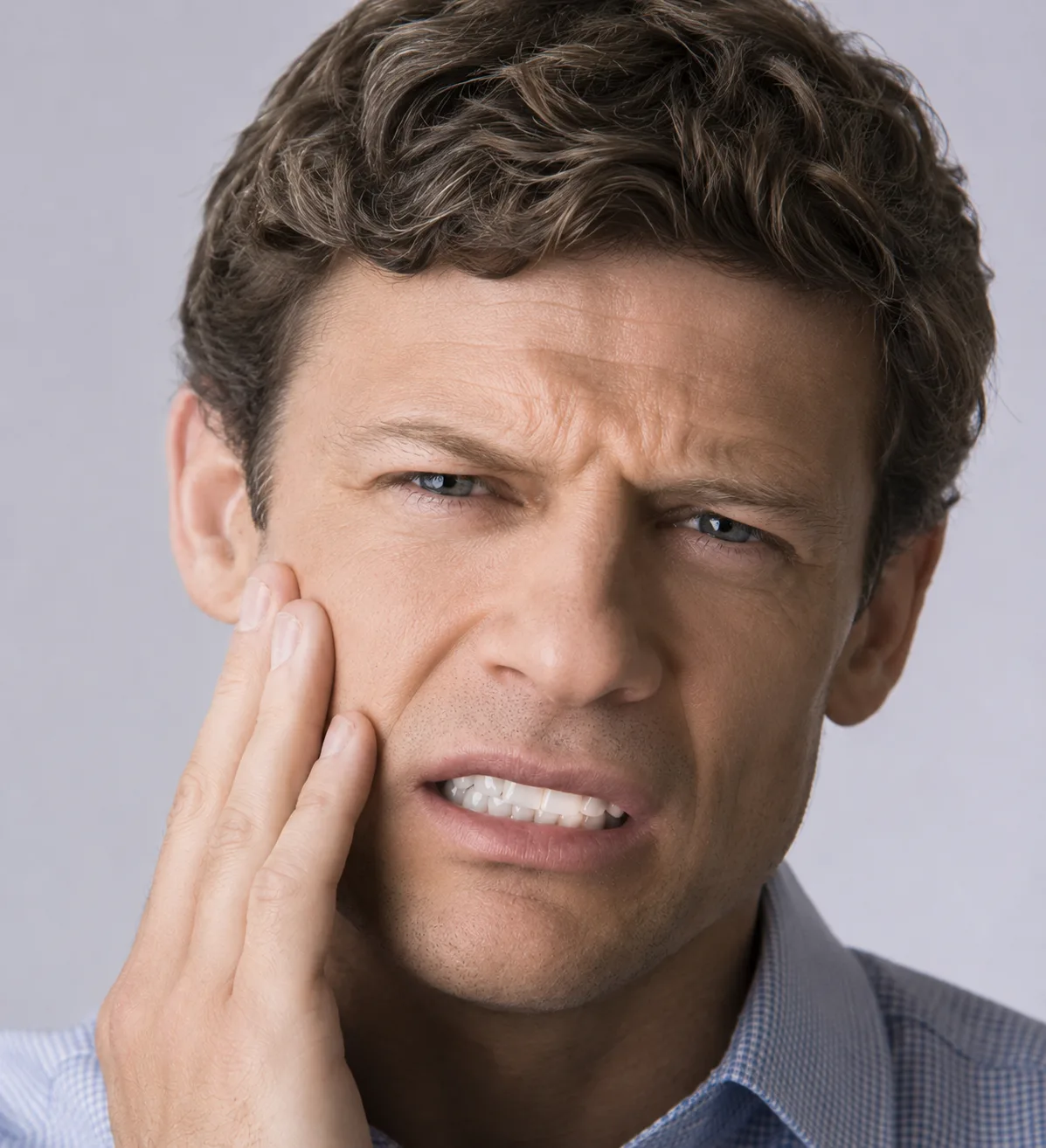
TMJ dysfunction affects more than the jaw. When it drives your headaches, the connection has to be explained — not assumed.
Direct answer
Can headaches be claimed secondary to service-connected TMJ?
Yes. A veteran may file a secondary claim when a new disability was caused or worsened by an already service-connected condition. For a headache claim secondary to TMJ, the evidence should generally establish a current diagnosis of migraines, tension headaches, or another headache disorder; an existing service-connected TMJ or temporomandibular disorder; and medical evidence explaining how the TMJ condition caused or aggravated the headache disorder.
How can TMJ dysfunction contribute to headaches?
The temporomandibular joints and chewing muscles are closely connected to structures throughout the face, temples, head, and neck. Painful or impaired jaw function may be associated with:
- Persistent tension in the chewing and temporal muscles.
- Pain that spreads from the jaw into the temples, face, head, or neck.
- Repetitive jaw clenching or teeth grinding.
- Headaches triggered or worsened by chewing and jaw movement.
- Sleep disruption caused by jaw pain.
- Increased frequency or severity of an existing headache disorder.
The National Institute of Dental and Craniofacial Research recognizes headaches associated with a temporomandibular disorder as a category of TMD. However, the presence of both conditions does not automatically establish that one caused the other.
What should a TMJ–headache nexus letter address?
A well-supported nexus letter should do more than state that TMJ and headaches can occur together. It should review the veteran's records and explain:
- When the TMJ symptoms and headaches began.
- Whether headaches coincide with jaw pain, clenching, or chewing.
- How the headache pattern changed as the TMJ condition progressed.
- Whether other likely causes have been considered.
- Whether TMJ caused the headaches or made them chronically worse.
- How the headaches affect work and daily functioning.
The opinion should apply the VA standard of whether the relationship is "at least as likely as not."
How does VA rate headaches?
All headache disorders are rated under 38 CFR 4.124a, Diagnostic Code 8100. The evaluation turns on how often attacks are prostrating — severe enough that you must stop what you are doing.
| Rating | Criteria |
|---|---|
| 50% | Very frequent, completely prostrating and prolonged attacks productive of severe economic inadaptability |
| 30% | Characteristic prostrating attacks occurring on average once a month over the last several months |
| 10% | Characteristic prostrating attacks averaging one in two months over the last several months |
| 0% | Less frequent attacks |
Fifty percent is the maximum schedular evaluation under DC 8100. VA assigns the rating. Brightview documents the clinical picture; it does not determine or predict the evaluation.
Headache nexus letters for veterans
Brightview Psychiatry Solutions prepares individualized medical nexus letters for veterans seeking to connect migraine or tension headaches to service-connected TMJ dysfunction. Every opinion includes a review of the veteran's relevant medical records, symptom history, potential alternative causes, and applicable medical research. We provide independent medical opinions for VA disability claims; we do not treat TMJ or prescribe headache medication.
Learn more about headache nexus letters, TMJ nexus letters, depression nexus letters, or see all nexus letters Dr. Allen provides.
FAQ
Common questions about headaches secondary to TMJ
Can TMJ cause headaches?
Can TMJ trigger migraines?
What does a TMJ headache feel like?
How can I tell the difference between a TMJ headache and a migraine?
Can I claim migraines secondary to service-connected TMJ?
Can I claim tension headaches secondary to TMJ?
Does my TMJ have to cause the headaches directly?
What evidence helps support a headache claim secondary to TMJ?
Do I need a formal migraine diagnosis?
Should I keep a headache log?
Can teeth grinding or jaw clenching cause headaches?
Can TMJ aggravate headaches that existed before the TMJ condition?
What if VA previously denied my headache claim?
Talk through your TMJ and headache claim
Free consult with Dr. Allen's team. No obligation.
Brightview Psychiatry Solutions PLLC provides independent medical opinions and psychiatric evaluations. This page is educational and is not medical or legal advice, and does not create a physician-patient relationship. VA determines service connection and assigns all disability evaluations. No outcome is guaranteed.