
Sleep Apnea Nexus Letters for Veterans Nationwide
If you were diagnosed with obstructive sleep apnea after service, a nexus letter may help explain how your condition is connected to service or to an already service-connected disability. Dr. Jessica Allen, a licensed psychiatrist and former VA C&P examiner, is also a member of the American Academy of Sleep Medicine (AASM). Dr. Allen writes physician-led nexus letters for veterans in all 50 states.
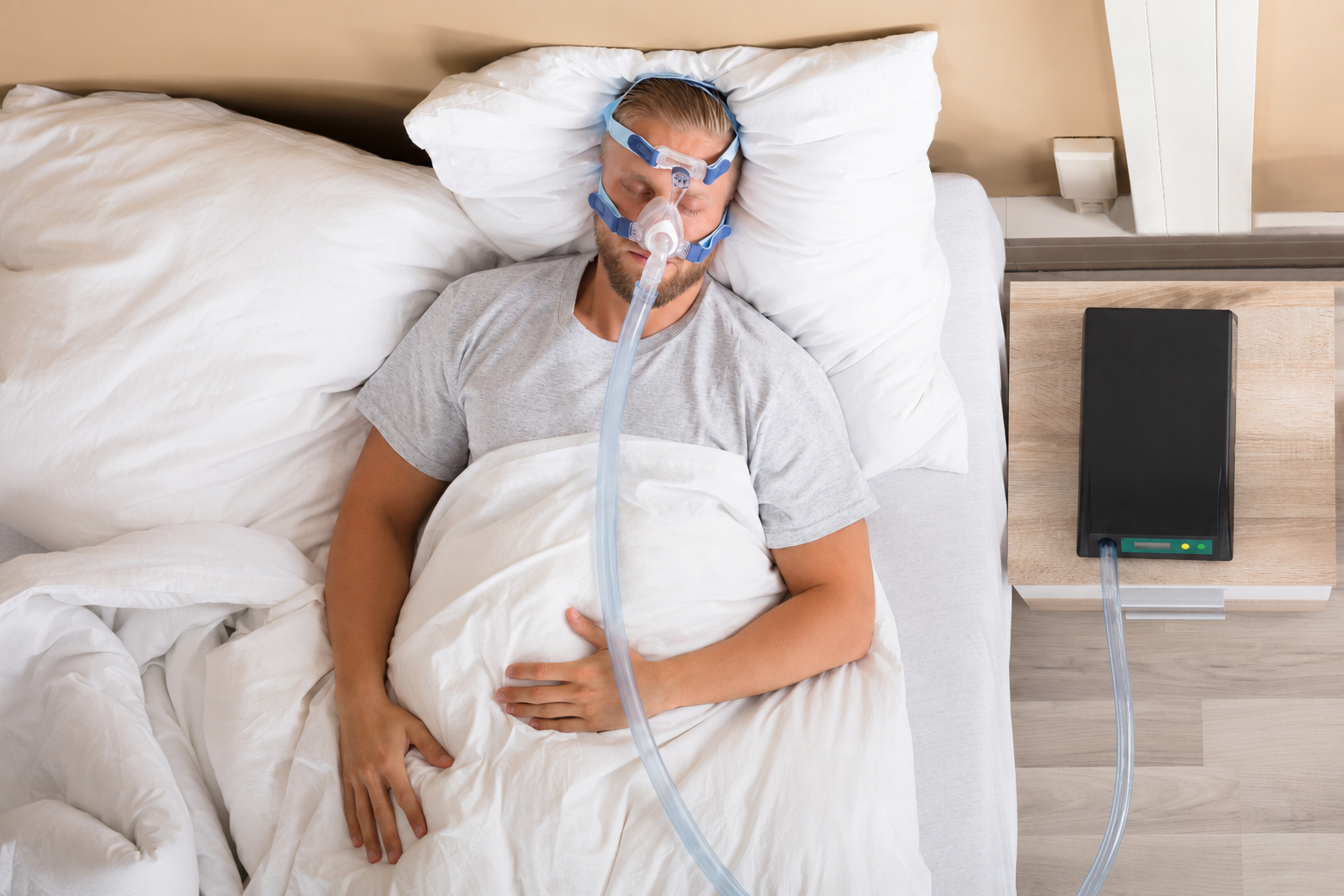
This page is for U.S. veterans and service members pursuing a VA disability claim for obstructive sleep apnea. We do not diagnose sleep apnea, prescribe CPAP or medication, or provide urgent medical care. If you need treatment, please contact the VA or your primary care provider.
Getting a Sleep Apnea Nexus Letter
A physician-written nexus letter for your sleep apnea claim
Whether you're filing a first-time claim or your sleep study came years after separation, a psychiatrist-authored nexus letter can explain the medical connection between your obstructive sleep apnea and your military service — or an already service-connected condition.
A sleep apnea nexus letter is one of the most effective pieces of evidence a veteran can submit with a VA claim. Dr. Jessica Allen writes each letter personally, grounded in your records and in the medical-legal language VA raters expect.
Common sleep apnea claim pathways
- Sleep apnea secondary to PTSD or another mental health condition
- Sleep apnea secondary to sinusitis, allergic rhinitis, or asthma
- Sleep apnea related to weight gain from service-connected orthopedic injuries
- Direct service connection when symptoms began in service
Schedule a Free Phone Consultation
Tell us about your sleep study, service history, and prior VA decision. We'll explain if a nexus letter can help your claim.
How Your Sleep Apnea May Connect
Sleep apnea is rarely a standalone claim — it usually connects to a condition you already have
If your sleep apnea developed during or after service, it may be medically connectable to a condition that is already service-connected. Dr. Allen evaluates these connections every day. Below are the five most common pathways she documents in nexus letters.
PTSD & Mental Health Conditions
Research recognizes a relationship between sleep apnea and mental health conditions including PTSD, Major Depressive Disorder, Generalized Anxiety Disorder, and Adjustment Disorder. If you are already service-connected for a mental health condition, your sleep apnea may be connectable as secondary.
Read the full pathwaySinusitis
Chronic sinus inflammation can contribute to airway obstruction during sleep. If sinusitis is part of your service-connected record, it may serve as the medical bridge to your sleep apnea diagnosis.
Read the full pathwayAllergic Rhinitis
Allergic rhinitis affects nasal airflow and is one of the most frequently documented conditions in secondary sleep apnea claims. Dr. Allen evaluates whether your rhinitis history supports a medical connection.
Read the full pathwayWeight Gain from Service-Connected Injuries
Musculoskeletal injuries that limit activity can lead to weight gain, and weight gain is a recognized contributor to obstructive sleep apnea. This chain — injury → weight gain → sleep apnea — is a pathway Dr. Allen documents when the medical evidence supports it.
Read the full pathwayCOPD & Other Lung Conditions
Conditions like COPD, chronic bronchitis, emphysema, and asthma affect breathing and can compound sleep apnea. If a respiratory condition is in your service-connected record, it may be evaluated as a connection pathway.
Read the full pathwayConfidential. No obligation. Dr. Allen will tell you honestly whether a connection can be supported.
Often Overlooked
Sleep apnea from medication side effects
Certain medications prescribed for service-connected conditions — including some psychotropic medications for PTSD, depression, and anxiety, opioid pain medications, and muscle relaxants — can contribute to weight gain, upper-airway muscle relaxation, and central respiratory suppression. Each of those mechanisms is a recognized contributor to obstructive or central sleep apnea. When the evidence supports it, Dr. Allen writes a nexus opinion tying the medication side effect to the sleep apnea diagnosis under 38 CFR 3.310 aggravation reasoning.
Denied?
Your sleep apnea claim was denied. Here's what to do next.
Most OSA denials come down to the same handful of examiner errors — theory of connection, aggravation not addressed, obesity used as a dead-end instead of an intermediate step. See the exact next steps we recommend after a denial.
Free Consultation
5 Ways Veterans Service-Connect Sleep Apnea
Not ready to file yet? Talk with Dr. Allen's team about the five most common connection pathways — and which one fits your service history — on a free, no-obligation call.
Talk directly with Dr. Allen's team — answers tailored to your claim.
Free, confidential consultation. No obligation.
Or call (984) 237-8044 — Mon–Fri, 9am–6pm ET.
How We Help
How to get service-connected for sleep apnea with a nexus letter
- 1
Receive a Sleep Apnea Diagnosis
A sleep study (polysomnography) is required to formally diagnose obstructive sleep apnea. This can be completed in a sleep lab or at home.
- 2
Determine Cause or Aggravation
Dr. Allen reviews your records to identify the best theory of service connection — direct, secondary to a mental health condition, or related to another service-connected condition.
- 3
Receive Your Sleep Apnea Nexus Letter
Get a personalized, physician-written letter with citations to peer-reviewed medical literature, ready to submit with your VA claim.
VA Sleep Apnea Ratings
How the VA rates sleep apnea (38 CFR § 4.97, DC 6847)
| Rating | Criteria |
|---|---|
| 0% | Asymptomatic but with documented sleep disorder breathing. |
| 30% | Persistent day-time hypersomnolence. |
| 50% | Requires use of breathing assistance device such as CPAP machine. |
| 100% | Chronic respiratory failure with carbon dioxide retention, cor pulmonale, or requires tracheostomy. |
Most veterans prescribed a CPAP qualify for a 50% rating.
Combined Rating Impact
How a 50% OSA Rating May Affect Your Combined VA Rating
For many veterans, service connection for OSA does more than validate the condition medically — it can raise the combined rating and monthly compensation. The examples below assume a single veteran with no dependents.
| PTSD Rating | OSA Rating | Combined (with VA math) |
|---|---|---|
| 50% | 50% | 75% → rounds to 80% |
| 70% | 50% | 85% → rounds to 90% |
| 100% | 50% | 100% |
These examples are educational only, based on a single veteran with no dependents. Actual compensation depends on the VA's final decision, combined ratings, dependents, and effective date.
Who Writes Your Opinion
Psychiatrist-authored by Dr. Jessica Allen
Every Brightview Psychiatry Solutions medical opinion is prepared by Dr. Jessica Allen — a licensed psychiatrist who personally reviews your records, applies clinical reasoning, and writes in the medical-legal language VA raters expect.
No ghostwritten opinions. No template letters. Dr. Allen reviews your records herself and forms an independent clinical opinion based on the evidence.
Dr. Jessica Allen
Licensed Psychiatrist · Former VA C&P Examiner · Brightview Psychiatry Solutions
- Medical training in psychiatry with focus on trauma, mood, and service-connected mental health conditions.
- Uses the VA legal standard "at least as likely as not," cites relevant medical literature, and addresses alternative causes and functional impact.
- Reviews your records personally — no ghostwritten opinions, no template letters.
- Member, American Academy of Sleep Medicine (AASM) — maintaining professional engagement with current sleep-medicine research, clinical standards, and developments relevant to obstructive sleep apnea.
Veteran Stories
Trusted by veterans across every branch
"Dr. Allen's nexus letter tied my sleep apnea to my PTSD and I was finally service-connected."
"After my VA denial blamed obesity, Dr. Allen explained the intermediate step and wrote a letter that supported my claim."
"Professional, fast, and she clearly understood the VA's standards. The letter was ready in under two weeks."
Conditions You Can Claim Secondary to Sleep Apnea
What Conditions Can I Claim Secondary to Sleep Apnea?
If OSA is already service-connected, some veterans can claim other conditions as secondary to it when the evidence supports the link. Untreated or inadequately controlled sleep apnea can drive repeated sleep disruption, oxygen desaturation, daytime fatigue, cognitive impairment, mood symptoms, and cardiovascular strain. Once sleep apnea is service connected, other conditions may in turn be claimed secondary to your service-connected sleep apnea. Depending on your history, these may include:
- Major Depressive Disorder →
- Migraine Headaches →
- Hypertension →
- Diabetes Mellitus →
- Atrial fibrillation and other arrhythmias
- GERD →
Call to discuss what you may be able to claim secondary to OSA
Free consultation with Dr. Allen's team. No obligation.
FAQ
Frequently Asked Questions About Sleep Apnea Nexus Letters
What is a nexus letter for sleep apnea?
Do I need a sleep study before filing?
Can sleep apnea be claimed as secondary to PTSD?
Can I file if my sleep apnea was diagnosed years after service?
What if a C&P examiner said my mental health condition doesn't cause sleep apnea?
Get Started
Request a Consultation
Tell us about your sleep apnea diagnosis, service-connected disabilities, and prior VA decision. Dr. Allen or a member of her team will respond within one business day.
Related conditions
Explore the secondary-service-connection pathways Brightview documents most often for obstructive sleep apnea.
- Read the pathway →
Sleep Apnea & PTSD
Sleep fragmentation, autonomic arousal, and psychotropic weight gain — the pathway raters accept.
- Read the pathway →
Sleep Apnea & Sinusitis
Chronic sinus inflammation, mouth breathing, and upper-airway resistance documented for VA review.
- Read the pathway →
Sleep Apnea & Allergic Rhinitis
Nasal obstruction and turbinate hypertrophy — one of the strongest secondary claims.
- Read the pathway →
Sleep Apnea & Weight Gain
The injury → inactivity → weight gain → OSA intermediate-step opinion the VA needs.
- Read the pathway →
Sleep Apnea & COPD
Overlap syndrome and nocturnal hypoxemia across COPD, asthma, and chronic bronchitis.
- Read the pathway →
Sleep Apnea & GERD
Reflux, airway irritation, and the bidirectional relationship between GERD and OSA.